What actually happens to a car when it reaches a salvage yard
It is not a field of wrecks. It is an indexed warehouse that happens to be outdoors.
September 17, 2026 · 3 min read
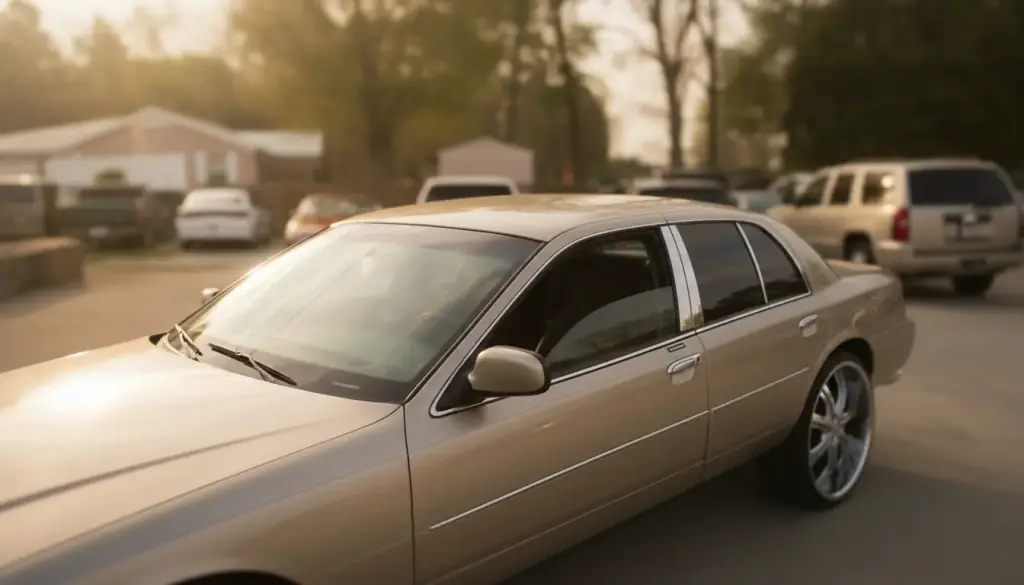
Most people picture a salvage yard as rows of ruined cars and someone with a wrench wandering about hoping to get lucky. That was true in places once. It has not been true here for a long time, and the difference is worth explaining, because it changes what you should expect when you call one.
How a vehicle arrives
Vehicles come to us two main ways. We buy at auction, and we take in used titled vehicles. Both matter. Auction gives us volume and variety, which is how the shelves keep refilling with the makes and models people around the Delta actually drive rather than whatever happened to turn up.
A car reaching a yard is very often not a wreck at all. Plenty arrive perfectly drivable, retired because one expensive thing failed on a vehicle that was not worth that particular repair. Those are the best donors, because most of the car is simply fine.
Cataloguing comes before dismantling
The important work happens before anything is taken apart. A vehicle gets identified and its usable components recorded, so the yard knows what it holds without anybody walking outside to look. That record is the difference between a yard that can answer your question in two minutes and one that says call back tomorrow.
Our inventory is computerised and indexed rather than kept in somebody's memory. It means when you ring up with a year, make and model, we are searching a list, not a lot.
There is also a housekeeping stage people never see. Fluids come out before a vehicle joins the rows: fuel, oil, coolant, brake fluid, refrigerant. That is partly good practice and partly self-interest, because a yard that lets vehicles leak into the ground ruins its own site. Batteries and tyres get separated out too, and once a shell has given up everything useful, the metal itself goes on to be recycled rather than sitting there forever.
Why parts are usually pulled to order
Some things live on shelves because they sell constantly: radiators, batteries, alternators and starters, wheels. Bigger and more fragile components tend to stay on the donor vehicle until somebody needs them, and that is deliberate.
A door panel or a piece of interior trim sitting on a rack collects damage and dust. Left in place it stays protected. Pulling to order also means the part comes off carefully with the right tools, instead of being wrestled out at speed, which is the single biggest factor in whether a used part arrives in the condition you were promised.
The network behind the yard
No single yard holds everything, and any yard claiming otherwise is guessing. What changes the odds is being connected. We are tied into a salvage network with over 2,000 yard contacts, so a part that is not on our shelves can often be located somewhere that has it.
That is also where fifty years of doing this earns its keep. Knowing which other vehicles shared a component, which model years overlap, and which part numbers supersede each other is what turns a dead end into a part on a truck. It is not something a search box does on its own.
What this means when you call
- Have the year, make and model ready, and the part number if you can reach it
- Say what the part is going on, not just what it is, because that affects which variant you need
- Ask what the warranty covers before you buy, so there is nothing to argue about later
- Tell us if you need it fitted, because we can do that here rather than sending you elsewhere
There is no charge to ask, and estimates are free. If we cannot help, we will say so quickly rather than keep you waiting on a maybe.
The part people miss
A salvage yard is not only somewhere to buy. It is also where a vehicle goes when it has reached the end for you but not the end for its components. If you have something sitting that is not worth repairing, it may still be worth something as a donor, and that is a conversation worth having rather than letting it rust behind the house.
We are at 4260 US-82 in Leland, open Monday to Friday, 8:00 AM to 5:00 PM. Call (662) 332-7744 and tell us what you are looking for, or what you are trying to move on.
Ed's Auto Inc, (662) 332-7744
Call (662) 332-7744More articles
Your battery keeps dying. It is probably not the battery.
The most common part we sell twice is a battery, because the first one was never the problem.
Buying a used car part: what to ask before you hand over money
A used part is often the smartest money you can spend on an older vehicle, as long as you ask four questions first.