Your battery keeps dying. It is probably not the battery.
The most common part we sell twice is a battery, because the first one was never the problem.
September 17, 2026 · 4 min read
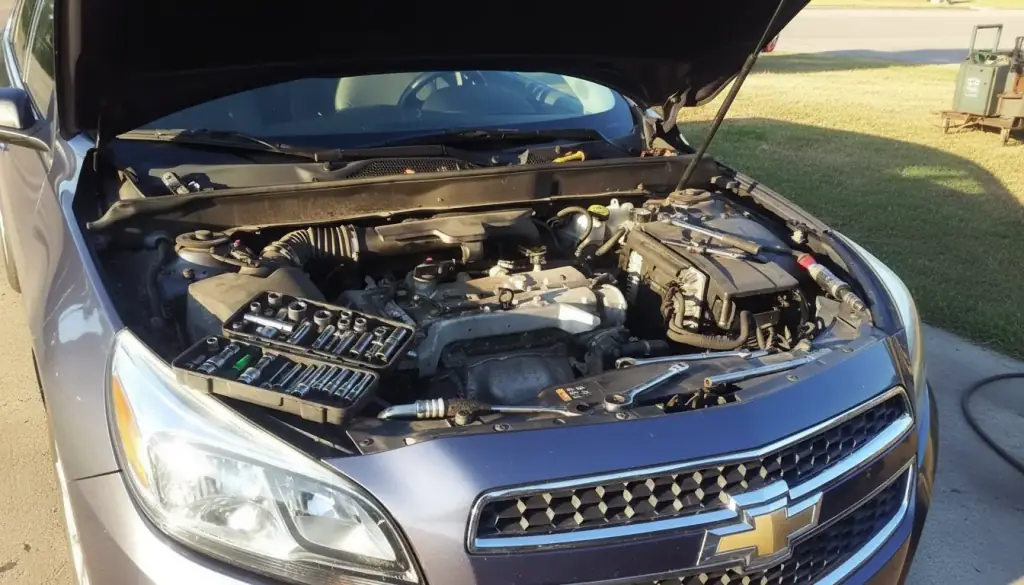
Somebody comes in every week with the same story. The car would not start, they put a new battery in it, and three weeks later it would not start again. Now they want another battery. Nine times out of ten we sell them an alternator instead, and the problem goes away for good.
A battery and a charging system fail in ways that feel identical from the driver's seat, which is why so many people replace the cheap one first. It is worth knowing the difference, because guessing costs you a part, and then it costs you the same part again.
What each part actually does
The battery has one real job: hold enough power to turn the engine over. Once the engine is running, the battery is close to a passenger. The alternator takes over, running the ignition, the lights, the radio and the fans, and putting charge back into the battery for next time.
So the question is not really whether the battery is flat. It is why it went flat. A healthy battery in a healthy car should not go flat sitting on a driveway for a few days. If yours does, something is either failing to charge it or quietly draining it.
The symptoms that point at charging
- The headlights dim noticeably at idle and brighten when you rev the engine
- The battery light or a warning symbol comes on while you are driving, not just at start-up
- A new battery went flat within a few weeks
- The car starts fine off a jump, runs, and then dies while you are driving
- The radio or dash flickers when you use the electric windows
That last one in the list matters more than people think. Dying while driving is almost never a battery. A battery that cannot hold charge will refuse to start the car in the morning, but once the engine is turning, the alternator should keep everything alive. If the engine quits while you are moving, the charging side has usually stopped feeding it.
The symptoms that point at the battery
A genuine battery fault usually shows up cold and early. The starter sounds slow and laboured, worse on the first cold morning of the season. It jumps easily and then runs perfectly all day. The lights are steady at idle. The battery is three, four, five years old, and the terminals are furred up with white or green corrosion.
Heat is the other half of the story around here. People assume batteries die in winter because that is when they notice, but Delta summers do more of the actual damage. Heat cooks the inside of a battery, and the following January simply exposes what July already did.
Why a shop test is different from a parts-counter test
Anyone can put a meter across a battery and read a number. The trouble is that a resting reading tells you the state of charge right now, not whether the alternator can keep up once the car is working. We test output under load, with the engine running and the electrical system actually being asked to do something, because that is the condition the fault appears in.
It is also worth checking for a parasitic drain, which is a circuit still pulling power after everything is switched off. A bad door switch, an aftermarket stereo wired badly, or a light staying on in the trunk will flatten a perfectly good battery overnight, and no amount of new batteries will fix it.
What it costs to get this wrong
The expensive version of this mistake is not the wasted battery. It is being stranded. A charging fault gets worse in one direction only, and it tends to finish the job somewhere inconvenient, because the car runs on the battery alone until there is nothing left in it. On US-82 that is a tow, not a walk.
The other cost is replacing a part that did not need replacing. We would rather test it and tell you the battery is fine. On an older vehicle a good used alternator off a titled car in our yard is frequently around half the price of a new one, and it comes with our usual 30-day warranty on most parts, so the honest answer is not the expensive answer.
If you are not sure
Bring it to us at 4260 US-82 in Leland, or call and describe what it is doing. Tell us the year, make and model, whether the lights dim at idle, and whether it has ever cut out while driving. Those three details usually tell us which part we are talking about before the car is even on the lot, and there is no charge to ask.
Ed's Auto Inc, (662) 332-7744
Call (662) 332-7744More articles
Buying a used car part: what to ask before you hand over money
A used part is often the smartest money you can spend on an older vehicle, as long as you ask four questions first.
Why Delta summers are so hard on car air conditioning
If you top your air conditioning up every summer, you do not have a system that needs gas. You have a leak.