Buying a used car part: what to ask before you hand over money
A used part is often the smartest money you can spend on an older vehicle, as long as you ask four questions first.
September 17, 2026 · 3 min read
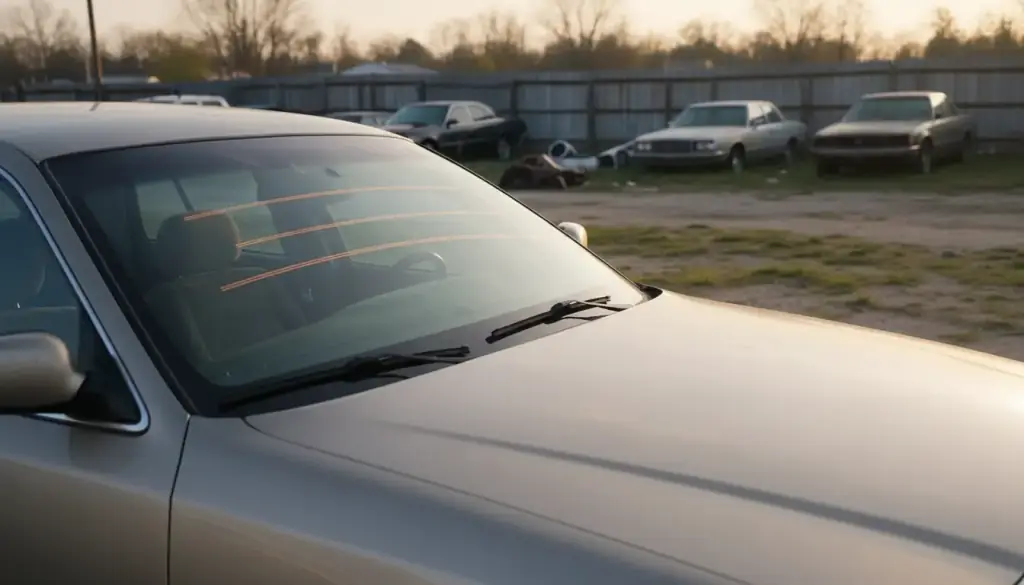
There is a moment with any vehicle past a certain age where the price of a new component is most of what the vehicle is worth. That is where a lot of perfectly good cars get given up on. It is also exactly where a used part earns its keep, and where knowing what to ask separates a good purchase from a part that sits in your trunk for a month.
Question one: what is the part number?
This single detail saves more time and money than everything else on this page. Manufacturers change components mid-model-year, and they do it without telling anybody outside the factory. Two alternators can look identical, mount identically, and have different pulleys or a different plug. Two radiators can differ only in the position of a transmission cooler line.
If you can get the number off the old part, do. It is usually stamped, etched or on a sticker somewhere on the body of the component. Year, make and model gets us close. A part number gets us exact. When you are working from a photograph on a phone, exact is what you want.
Question two: where did it come from?
A used part has a history, and it is fair to ask about it. A component pulled properly off a titled vehicle is a different thing from one that was cut out in a hurry. We buy vehicles at auction and take in used titled vehicles, and parts get pulled rather than hacked out, because a part that arrives damaged comes straight back and helps nobody.
It is also reasonable to ask what the donor vehicle was. A body panel off a car that sat outside for ten years is not the same purchase as one off a vehicle that came in last month.
Question three: what is the warranty?
Ask before you buy, not after something goes wrong. Most of what leaves here carries a 30-day warranty, and we will tell you what is covered on your specific part up front. What you want to avoid is the shop that is vague about it, because vague usually means the conversation gets difficult later.
A warranty is also a signal. A yard willing to stand behind a part has a reason to test it before it goes out of the door.
Question four: who is fitting it?
This is the question people forget. A cheap part fitted twice is not cheap. If you are doing the work yourself, make sure you know what else has to come off, and whether there are gaskets, seals or bolts that should be replaced at the same time rather than reused.
If you are not doing the work yourself, there is a real advantage in buying the part where it can also be fitted. Our repair bays and our yard are the same business at the same address, so a used part can be pulled, tested, priced and bolted on without the vehicle leaving Leland. That also removes the argument that happens when the part came from one place and the labour from another.
What is worth buying used, and what is not
- Usually a good used buy: alternators, starters, radiators, wheels, glass, mirrors, interior trim, body panels, engines and transmissions from a known donor
- Ask more questions first: anything that wears as a matched set, and safety-critical components where you cannot see the history
- Always replace rather than reuse: gaskets, seals and single-use fasteners that come off during the job
We will tell you which category your part falls into. There are things we would rather not sell you used, and we say so, because the alternative is selling you a problem.
If it is not on our shelf
Our inventory is indexed and searchable rather than kept in somebody's head, and we are tied into a salvage network with over 2,000 yard contacts. So when the obvious answer comes back empty, the search does not stop at our fence line. Over fifty years of doing this has taught us where to look next.
We ship parts out across the country and overseas, and we quote the shipping with the part rather than surprising you at the end. Plenty of people still prefer to drive in, some from more than an hour away, but you do not have to. Call us on (662) 332-7744 with the year, make, model and, if you have it, that part number.
Ed's Auto Inc, (662) 332-7744
Call (662) 332-7744More articles
Your battery keeps dying. It is probably not the battery.
The most common part we sell twice is a battery, because the first one was never the problem.
Why Delta summers are so hard on car air conditioning
If you top your air conditioning up every summer, you do not have a system that needs gas. You have a leak.