Is this repair worth it on an older car? How we work it out
The question is never just what the repair costs. It is what the car does for the next two years.
September 17, 2026 · 3 min read
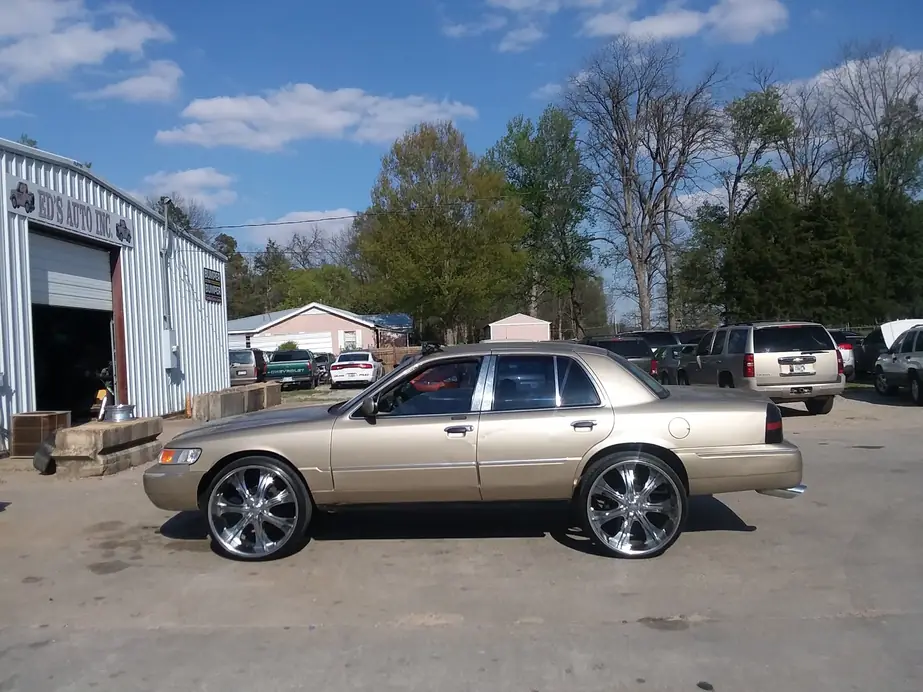
It is the hardest conversation in this business, and we have it most weeks. Somebody has a vehicle they know well, it needs something significant, and they want to be told whether to spend the money. Nobody can answer that with a single number, but there is a way to think about it that beats guessing.
Stop comparing the repair to the car's value
The usual rule people quote is that you should not spend more than the car is worth. It sounds sensible and it is mostly wrong, because the alternative to fixing your car is not having no car. It is buying a different one.
The better comparison is cost per month of reliable driving. A repair that keeps a known vehicle on the road for another two years is competing with two years of payments, tax, insurance changes and the unknown faults of somebody else's used car. Measured that way, plenty of repairs that look foolish on paper are the cheapest option available.
The four questions we actually ask
- What else is close behind? One big repair on an otherwise sound car is different from one big repair on a car with three more queued up
- How is the body and the frame? Mechanical parts can be replaced almost indefinitely. Rot is the thing that genuinely ends a vehicle
- How well do you know this car? A vehicle you have owned for years has no surprises in it, and that is worth real money
- Is there a used-part route? For many jobs this changes the price enough to change the answer entirely
That second one decides more cases than anything else. We have told people to keep spending on cars with high mileage because the structure was sound, and we have told people to stop on lower-mileage vehicles that were coming apart underneath.
The third question gets dismissed as sentiment, and it is not. A vehicle you have owned for years has a known history: you know what has been replaced, what it has always done, and what noise it has made since 2019 without ever getting worse. A used car off a lot has none of that, and whatever is wrong with it is wrong already, you simply have not met it yet. People routinely trade a known fault for an unknown set of them and count that as progress.
Where the yard changes the arithmetic
This is the part a shop without a yard cannot offer. When a repair needs an alternator, a radiator, a transmission, a door, a piece of glass or a body panel, we can price a tested used part alongside the new one and let you decide with both numbers in front of you.
On an older vehicle that difference is frequently the whole decision. A repair that does not make sense at new-part prices often makes obvious sense at used-part prices, and the car goes back to work instead of to scrap. Most parts we supply carry a 30-day warranty, so it is not a gamble in place of a guarantee.
When we tell people not to spend it
We do say no, and we would rather say it early. If the frame is gone, if the repair in front of you is one of several, or if the vehicle has a fault that will simply return, then spending is throwing money at something that is finished. Selling somebody a repair we do not believe in gets us paid once and loses the customer permanently.
If it comes to that, the car may still be worth something as a donor vehicle rather than as transport, and that is a better outcome than it sitting in a yard at home.
Get the diagnosis before the decision
The mistake to avoid is deciding based on a guess about what is wrong. A no-start that somebody assumed was an engine has turned out to be a starter circuit more than once. A transmission that was written off as finished has turned out to be a linkage. The repair you are dreading may not be the repair you need.
We test before we quote, and estimates are free. You get the real fault, the price with a new part, the price with a good used one where that is sensible, and an honest opinion about what the vehicle has left in it.
Bring it to 4260 US-82 in Leland, or call (662) 332-7744 with the year, make and model and what it is doing. We have been answering this question on this stretch of road since 1973, and we will tell you straight.
Ed's Auto Inc, (662) 332-7744
Call (662) 332-7744More articles
Your battery keeps dying. It is probably not the battery.
The most common part we sell twice is a battery, because the first one was never the problem.
Buying a used car part: what to ask before you hand over money
A used part is often the smartest money you can spend on an older vehicle, as long as you ask four questions first.